Labial hypertrophy is a condition in which the tissue of one or both labia minora has stretched or enlarged. It can also cause pain from rubbing against underwear, or vaginitis that keeps recurring.
In short, what decides side effects is not whether the procedure is done. It is how precisely the design that sets the extent of excision, the suture method and recovery care have been matched to the person.
This article sets out the symptoms of labial hypertrophy, the causes of side effects and the criteria to check when the extent of excision is decided, based on published research.
What is labial hypertrophy, and why can it lead to side effects?
Labial hypertrophy is improved with a procedure that excises the problem area to restore appearance and function, but simply cutting away the stretched part makes a satisfying result difficult to achieve. This is because the labia minora sit alongside other reproductive structures, including the labia majora, the clitoris and the vaginal opening, and if the proportions of the vulva as a whole are not considered, the side effects a patient was worried about can become even greater.
What side effects can overcorrection cause when the extent of excision is decided?
If tissue that should cover the clitoris is also removed and the clitoris becomes overly exposed, sensitivity can increase. If the wings of the labia minora end up asymmetrical or the vaginal opening is exposed, rubbing can lead to dryness and pain, and bacteria can enter, which can also be a cause of frequent vaginitis.
- Pain — can occur when overcorrection removes too much tissue and nerve irritation remains
- Infection — appears when the vaginal opening is exposed and outside bacteria can enter more easily
- Change in sexual sensation — arises when too much of the tissue covering the clitoris is removed and sensitivity changes
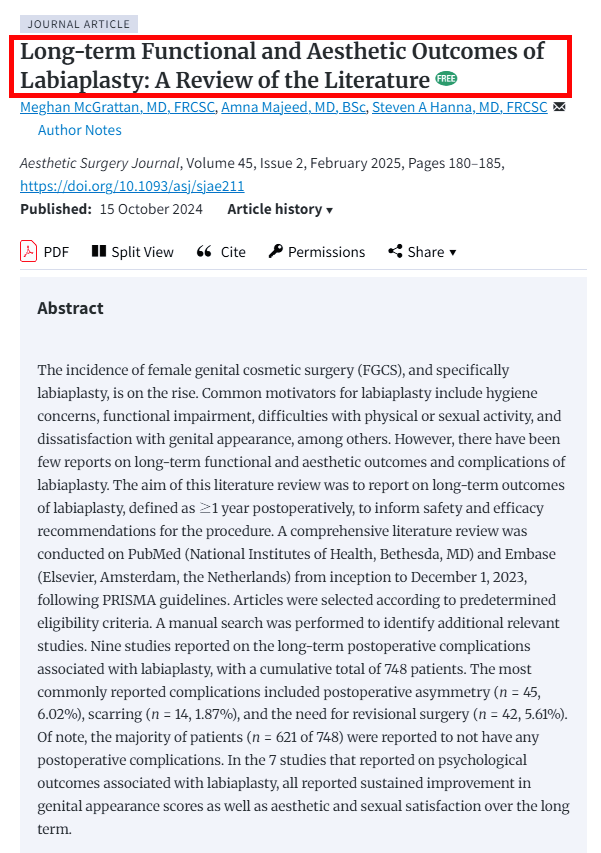
What side effects are reported in the long term?
The study stated that long-term outcomes and complications of labiaplasty are rare but do exist, and it gave as examples of side effects a spraying pattern when urinating, remaining scars, and decreased or heightened sexual sensation. These symptoms were mostly temporary, but the possibility that they continue after 1 year or more was also reported.
- Urinary symptoms — the urine stream can scatter in several directions in a spray pattern
- Scarring and changes in sensation — a visible scar, reduced sexual sensation or hypersensitivity can remain
- Chronic pain — vulvar pain or pain during intercourse can continue after 1 year or more
How should design and recovery care be matched to reduce side effects?
The elasticity and thickness of the stretched tissue, the protruding area and its relationship to the clitoral folds differ from person to person, and the pattern of enlargement also varies depending on whether it affects one side or both, so the extent of excision and the degree of asymmetry correction have to be designed precisely. If everyone is sutured in the same way without considering skin thickness, there is a risk of scarring, and in some cases the labia minora curl inward during recovery.
Even after the stitches are removed, the state of recovery needs to be checked and the timing of a return to daily life discussed. When precise excision design, tailored suturing and recovery care are matched together, this can lead to a result that is satisfying in the long term.